Evergreen guide · Darkwave cocoon
What Is Darksynth?
Neon horror synths explained â origins, sound palette, and how darksynth differs from synthwave and darkwave, with White Ritual’s Crosses on the map.
Definition
The shadowed edge of synth culture
Darksynth is the shadowed edge of modern synth culture: retro-shaped synthesizers pushed through distortion, horror-film tension, and cyber-noir atmosphere. Where classic synthwave rides neon highways in daylight, darksynth turns the headlights off â and keeps the engine loud.
For White Ritual, a French darkwave / electro-rock band from Strasbourg on darkTunes Music Group, darksynth is not a costume. It is one lane in a living map that also includes coldwave pulse, electro-rock weight, and ritual vocals. Singles like Crosses (2025) show how neon bass and occult framing can sit inside a contemporary darkwave project â without freezing into an 80s museum piece.
If you landed here from the Darkwave hub, this page zooms into that darker synth lane and how White Ritual uses it.
History
Origins: from outrun glow to horror neon
Synthwave itself grew in the mid-to-late 2000s, especially in France and Western Europe, drawing on 1970sâ80s film scores, video-game palettes, and producers who treated nostalgia as raw material rather than pastiche. Darksynth is documented among synthwave’s subgenres, with horror-cinema influence as a defining turn.
The darkened half hardened around 2012â2013. French producers Carpenter Brut (Franck Hueso) and Perturbator (James Kent), alongside artists such as Dance with the Dead, Gost, and Mega Drive, pulled synthwave away from sunny outrun romance toward grindhouse, slasher, and cyber-doom imagery. Early Carpenter Brut EPs later gathered as Trilogy (2015); tracks like âTurbo Killerâ became shorthand for the genre’s chase-scene structure. Perturbator’s path â from early releases such as Terror 404 toward heavier, more industrial-leaning records like The Uncanny Valley (2016) â helped convince scene writers that âdarksynthâ was more than a mood tag.
Scene journalism at Electrozombies argued that by the late 2010s the style had earned its own name: producers were hacking away at synthwave’s house and Euro-disco roots and mingling instead with industrial, metal, and harsh electronic body music. The shift moved from bright âMiami Viceâ energy toward the darker electronic terrains of John Carpenter and Goblin, infused with post-punk, industrial, and EBM colours.
Darksynth did not invent darkness in electronic music â but it gave a specific neon-horror dialect to a generation raised on VHS dread, cyberpunk fiction, and Bandcamp undergrounds.
Sound
Sound & palette: what you actually hear
Expect the same family of tools as synthwave â analog-style pads, arpeggiated bass, gated drums â then listen for the damage:
- Distorted leads and bass run through amp sims, bitcrushers, or heavy saturation until they feel closer to industrial metal than to polished film score.
- Heavy downbeats â low, clipped kicks and oversized snares that hit like a chase cue, not a cruise playlist.
- Minor / dissonant harmony and tension builds that behave like soundtrack acts: theme â build â release.
- Mostly instrumental DNA in the classic scene, though vocal projects (including darkwave hybrids) increasingly claim the palette.
- Visual twin: red/black artwork, occult or slasher iconography, cyber-noir cities â less pink grid nostalgia, more ritual under neon.
Typical tempos sit in a mid, weighty band (often around 90â110 BPM for core instrumental darksynth), with structure closer to a short horror cue than to a pop verse-chorus machine. Metal-leaning acts stretch faster; atmospheric producers slow the pulse. The constant is pressure.
Compare
Darksynth vs synthwave vs darkwave
These labels get mashed together in playlists. They are not the same map.
| Synthwave | Darksynth | Darkwave | |
|---|---|---|---|
| Core lineage | 80s film/game nostalgia, outrun, French house cousins | Synthwave’s horror / industrial outgrowth | Late-70s/80s post-punk & new wave nocturnal tradition |
| Mood | Cruise, romance, retro-futurist glow | Dread, chase, cyber-doom | Melancholy, confession, gothic atmosphere |
| Typical focus | Melodic themes, clean retro synths | Distortion, heavy rhythm, cinematic aggression | Vocals, bass/guitar/synth blend, introspective lyric |
| Not the same as | â | Not âdarkwaveâ (despite the blend-word trap) | Not simply âdark synthwaveâ |
EBM and industrial share club muscle and machine aesthetics with modern darksynth â a spiritual neighbour to aggrotech / dark electro â but EBM’s genealogy runs through 80s body music and later harsh club forms, not through outrun soundtrack revival. Darksynth borrowed the violence of those worlds without erasing its synthwave ancestry.
White Ritual’s rule of thumb: darkwave is the emotional and vocal home; darksynth is the neon blade that cuts through certain singles; electro-rock is the live body that keeps the ritual physical.
White Ritual
Where White Ritual fits
White Ritual is not a pure instrumental darksynth project. The band’s centre remains French darkwave / electro-rock: ethereal lead vocals (Coralie Setan), harsh counter-vocals, cinematic guitars, live drums, and synth architecture from Strasbourg. Tags across the site openly include darksynth beside darkwave and electro-rock â a crossroads, not a rebrand.
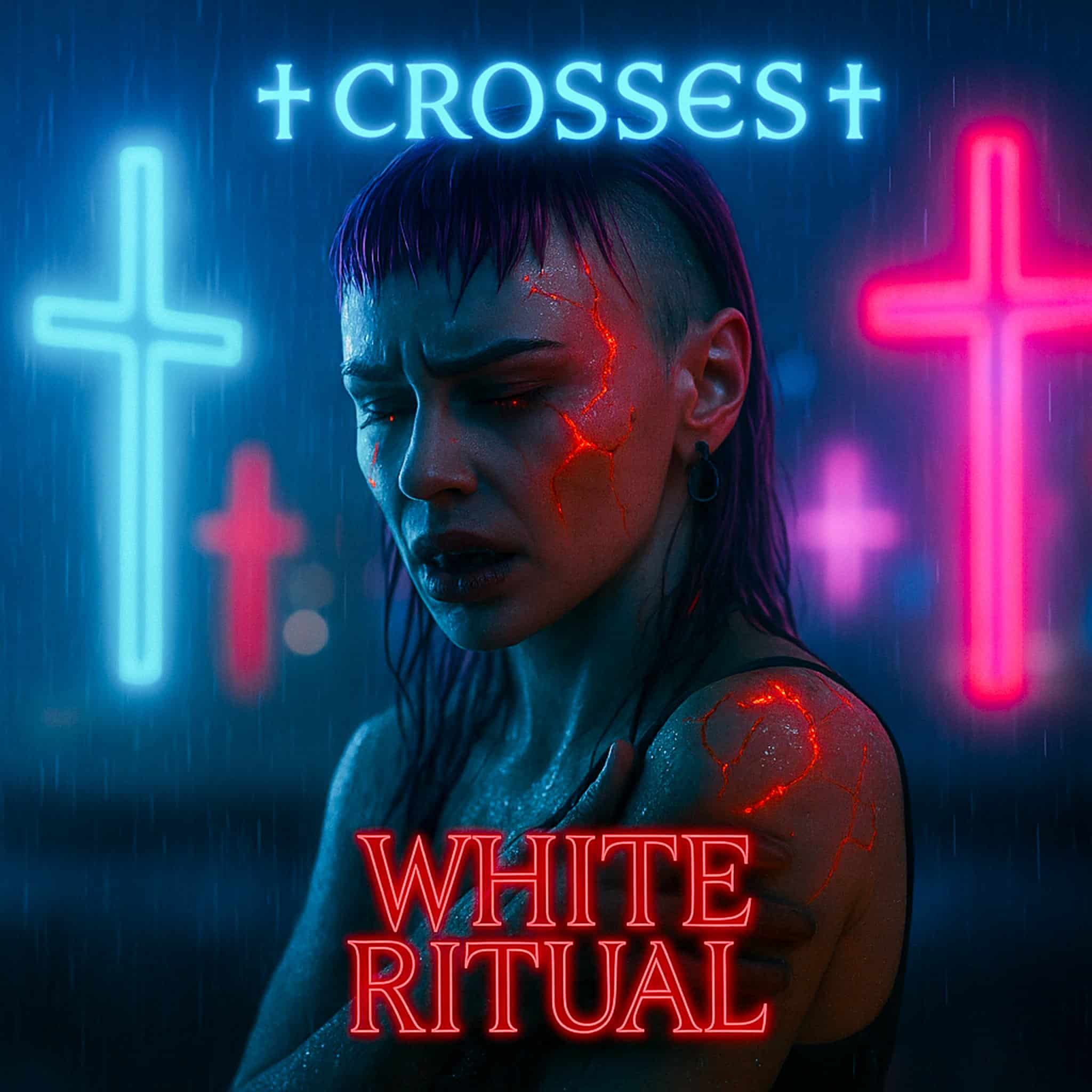
The clearest darksynth doorway is Crosses (single, 10 October 2025). Official framing describes pulsing synthwave basslines, hypnotic retro keys, and a haunting vocal presence â a neon plunge âinto the upside-down.â The About chronicle notes Carpenter Brut and Blade Runner as reference points for that cut. Terra Relicta (13 October 2025) called Crosses âa neon-soaked plunge into the upside-down⦠dark, seductive and electric,â and filed the band as a French darkwave / dark-synth act.
That is the White Ritual move: borrow darksynth’s pressure and neon-horror cinema without abandoning voice, rock body, or contemporary darkwave narrative. Album-era work such as In & Out (2022) and later singles like Ritual Lust (2025) keep the wider map open. The 2026 collaboration Furious Passion (feat. Kylreez) leans into a synthwave collision rather than pure darksynth â best discovered from the Music hub and Videos until a dedicated single page ships.
In short: White Ritual walks the same French night streets that birthed Carpenter Brut and Perturbator’s scene vocabulary, then brings rituals, vocals, and electro-rock impact that classic instrumental darksynth often leaves offstage.
Next
Listen next
Start with the neon blade, then widen the circle.
- Crosses â the darksynth-leaning single and video hub.
- Music â full discography, including Ritual Lust, In & Out, and the Kylreez collaboration.
- Videos â official clips for Crosses, Ritual Lust, Furious Passion, and live archive.
- Darkwave â parent hub: what darkwave means today and how the cocoon connects.
Enter the ritual. Cross your fingers. Keep the neon on.